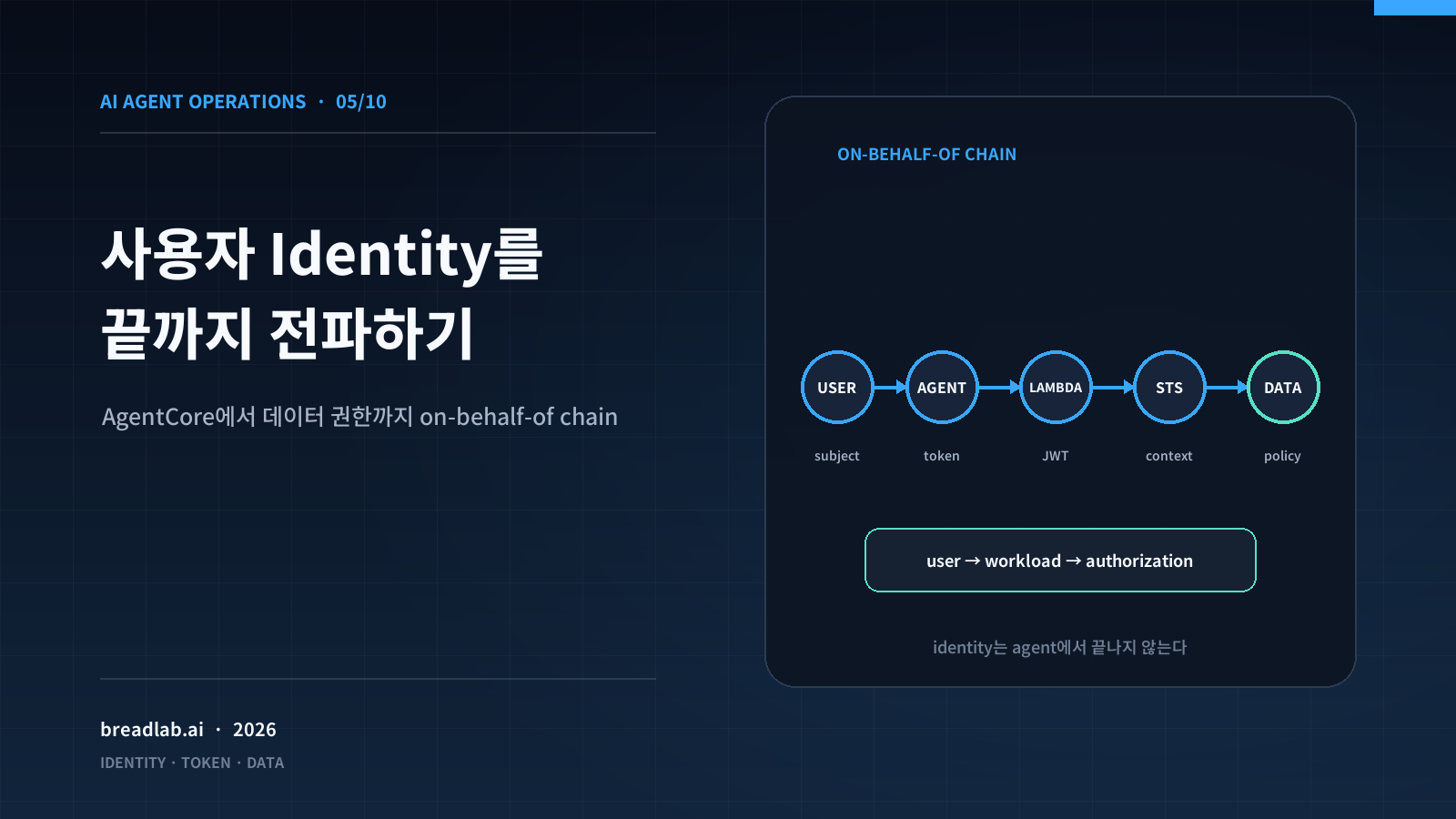
데이터 에이전트가 자연어를 SQL로 바꿔 Athena를 호출한다고 하자. 공용 IAM role만 사용하면 Lake Formation이 보는 주체도 직원이 아니라 그 role이다. 해결 목표는 사용자별 권한을 agent 코드에 복제하는 것이 아니라, 인증 증거를 foundation model에 노출하지 않고 최종 data plane에 실제 사용자 identity를 전달하는 것이다.
AWS가 제시한 패턴은 사용자 id_token을 prompt나 tool argument가 아닌 HTTP header로 운반하고, Lambda에서 검증·교환한 뒤 identity-enhanced role session으로 Athena를 호출한다.[1] 다만 이 흐름은 token 전달만 구현한다고 안전해지지 않는다. Lake Formation의 강제 여부, Athena 결과 bucket, ID token 검증, STS trust와 감사 범위를 각각 닫아야 한다.
두 token과 두 channel
access_token: AgentCore Runtime 또는 Gateway ingress 자체를 호출할 권한을 증명한다.id_token: 요청 배후 사용자를 나타내며 Lambda의 identity exchange 입력으로만 쓴다.
Runtime 호출의 Authorization: Bearer <access_token>과, 별도 custom header인 X-Amzn-Bedrock-AgentCore-Runtime-Custom-IdToken: <id_token>을 같은 것으로 취급하면 안 된다. Gateway가 OAuth/JWT authorizer로 검증하는 Authorization 값은 Gateway 접근용 access token이고, Lambda로 전달할 custom header의 ID token은 별도 검증·교환 대상이다. 둘 다 JSON body 밖에 두되 수신자와 audience가 다르다.
model-visible tool contract
  query, database

trusted transport metadata
  Authorization: Bearer <gateway access_token>
  X-Amzn-Bedrock-AgentCore-Runtime-Custom-IdToken: <user id_token>
“모델이 보지 않는다”는 agent process가 token에 접근할 수 없다는 뜻은 아니다. AgentCore code는 allowlist된 header를 읽어 다음 hop에 붙인다. Container, HTTP client와 Lambda는 trusted computing base이며 request context 전체를 log·trace에 남기지 않아야 한다.[1]
전체 흐름과 선행 조건
User/UI → Runtime → agent container → Gateway → Lambda
   access_token: 각 ingress 인증
   id_token: custom header로만 전달
Lambda: ID token 검증 → CreateTokenWithIAM(JWT Bearer grant)
      → STS AssumeRole(ProvidedContexts)
      → 고정 Athena workgroup → Lake Formation → S3 result
이 흐름의 선행 조건은 IAM Identity Center에 trusted token issuer(TTI), customer-managed OAuth 2.0 application, 해당 TTI와 audience, 필요한 scope와 trusted application을 구성하는 것이다. CreateTokenWithIAM 호출 주체에는 SigV4 자격과 application resource policy가 필요하고, JWT Bearer grant를 활성화해야 한다. Application이 assignment를 요구한다면 사용자 또는 group assignment도 먼저 존재해야 한다.[4][5]
CreateTokenWithIAM의 JWT Bearer grant는 RFC 7523 프로파일이다. 즉 외부 JWT를 assertion으로 IAM Identity Center token/context로 교환하는 grant를 설명한다.[4][9] 이를 RFC 8693의 일반 OAuth Token Exchange나 “OBO 표준”과 같은 흐름으로 부르면 안 된다. RFC 8693은 별도의 subject/actor token 기반 token exchange 표준이며 이 구현의 API 계약이 아니다.[10]
세 가지 AgentCore 전달 경계
1. Runtime allowlist
Runtime의 requestHeaderAllowlist에는 필요한 custom ID-token header만 넣는다. Runtime 자체의 inbound OAuth 설정은 access token을 검증한다. 누락됐을 때 body로 token을 복사하는 fallback은 두지 않고 fail-closed한다.[2]
{"requestHeaderConfiguration":{"requestHeaderAllowlist":[
  "X-Amzn-Bedrock-AgentCore-Runtime-Custom-IdToken"
]}}
2. Gateway target allowlist
Gateway target의 metadataConfiguration.allowedRequestHeaders도 identity exchange Lambda에만 같은 custom header를 허용한다. 모든 target에 wildcard처럼 전파하지 않는다.[3]
{"metadataConfiguration":{"allowedRequestHeaders":[
  "X-Amzn-Bedrock-AgentCore-Runtime-Custom-IdToken"
]}}
Tool schema에는 token뿐 아니라 workgroup과 output_location도 노출하지 않는다. Model이 선택할 수 있는 값은 query와 승인된 logical database 정도로 줄인다.
{"name":"run_athena_query","inputSchema":{
  "query":"string","database":"string"
}}
3. Lambda handoff
Lambda는 tool event가 아니라 AgentCore 전용 client context에서만 ID token을 읽는다. 같은 이름의 body field가 trusted header를 override하지 못하게 한다.[1]
headers = (context.client_context.custom or {}).get(
    "bedrockAgentCorePropagatedHeaders", {})
id_token = headers.get(
    "X-Amzn-Bedrock-AgentCore-Runtime-Custom-IdToken")
query = event["query"]
이 세 항목은 “세 가지 configuration”이라는 제품 묶음이 아니라 Runtime→container, Gateway→target, target→Lambda의 세 가지 전달 경계다.
ID token 검증은 OIDC 규칙으로
Header로 숨겨 운반했다는 사실은 token의 진위를 보장하지 않는다. Lambda는 IdP의 OIDC profile에 맞는 검증 library를 사용해 다음을 fail-closed로 확인한다.
- 허용한 algorithm과 해당 issuer의 JWKS
kid로 JWS signature를 검증한다. iss가 사전 등록한 issuer와 정확히 일치하는지 확인한다.- ID token의
aud에 이 Relying Party의 client ID가 포함되는지 확인한다. Audience가 여러 개면 profile에 따라azp도 확인한다. - 현재 시간이
exp이전인지 확인하고, profile과 정책에 따라iat의 비정상 미래값,nbf, 허용 clock skew를 검사한다. - Authorization request에서
nonce를 사용했다면 응답 token의nonce가 원 요청과 일치하는지 확인한다. - Cognito user pool token이면
token_use == "id",aud == app client ID, 예상 user pooliss까지 확인한다.
이는 OIDC Core의 RP ID-token validation 규칙과 IdP profile을 적용하는 단계다.[7] Cognito도 signature, expiration, issuer, ID-token audience와 token_use 검증을 명시한다.[8] RFC 7523은 이 로컬 ID-token 검증 근거로 대신 인용하지 않고, 검증을 통과한 JWT를 CreateTokenWithIAM에 넣는 JWT Bearer grant에만 연결한다.[9]
검증 후에는 요청 scope를 sts:identity_context 등 필요한 값으로 명시해 downscope한다. 원 ID token, 교환 응답, assertion은 model·browser에 반환하거나 session 간 cache하지 않는다.[4]
ProvidedContexts와 role 경계
CreateTokenWithIAM 응답의 awsAdditionalDetails.identityContext를 STS 입력의 ContextAssertion으로 사용하고, provider는 IAM Identity Center로 고정한다.[4][6]
{"ProvidedContexts":[{
  "ProviderArn":"arn:aws:iam::aws:contextProvider/IdentityCenter",
  "ContextAssertion":"<identityContext>"
}]}
ContextAssertion은 application이 새로 만들거나 claim을 조립하는 문자열이 아니라 AWS가 발급한 signed·encrypted trusted context assertion이다. TIP role trust policy는 Lambda 실행 role 하나만 principal로 신뢰하고 sts:AssumeRole과 sts:SetContext만 허용한다. 또한 sts:RequestContextProviders가 위 Identity Center provider ARN과 같고 값이 누락되지 않았다는 조건을 둔다. 호출자 policy도 특정 TIP role에 대한 최소 권한만 부여한다.[6][11]
Session duration은 업무에 필요한 최단 시간으로 제한하고 invocation 간 credential을 공유하지 않는다. Identity context가 없거나 잘못되면 일반 role session으로 재시도하지 않는다.
Lake Formation이 정말 강제되는 조건
Identity-enhanced session만으로 사용자 grant가 자동 강제되지는 않는다. Athena/Lake Formation처럼 user-based authorization을 지원하는 서비스여야 하고, Data Catalog와 S3 location이 Lake Formation 관리 범위에 있어야 한다.[5]
특히 기존 Glue 호환 설정의 IAMAllowedPrincipals에 Super가 남아 있으면 account principal이 IAM 경로로 접근해 사용자별 LF grant를 우회할 수 있다. 다음 둘 중 하나를 명시적으로 선택한다.
- LF 전면 강제: 대상 database/table에서
IAMAllowedPrincipals권한을 제거하고 S3 location을 Lake Formation에 등록한다. - Hybrid access mode: legacy IAM 사용자는 유지하되, TIP principal과 대상 resource 조합을 hybrid access mode에 opt in해 그 조합에는 LF 권한이 적용되도록 한다. Opt-in하지 않은 principal은 계속 IAM 경로를 사용할 수 있으므로 이를 LF 강제로 오해하면 안 된다.[12]
사용자·group에는 table SELECT, column grant 또는 data filter에 대한 SELECT permission을 부여한다. Row-level 보안은 독립된 “row-level grant”가 아니라 row expression을 가진 data filter를 만들고 그 filter를 선택해 permission을 grant하는 방식이다.[13]
TIP role은 athena:StartQueryExecution, 필요한 catalog read, lakeformation:GetDataAccess 등 실행 권한만 갖고 governed source bucket의 직접 s3:GetObject나 broad LF data grant는 갖지 않는다. IAMAllowedPrincipals 제거/opt-in, identity context 제거, grant 없는 사용자, 서로 다른 data filter를 각각 negative test한다.
Athena 결과는 별도의 S3/IAM 경계다
Lake Formation은 query source를 통제하지만 Athena query result location은 LF에 등록할 수 없고 LF permission도 적용되지 않는다. 결과 CSV와 metadata는 S3 IAM/KMS 정책의 보호 대상이다.[14] 따라서 source table이 안전해도 result bucket이 공유돼 있으면 데이터가 새어 나간다.
운영 권고: 서버가 고정 workgroup을 선택하고 tool schema에서 workgroup, output_location을 제거한다. Workgroup의 EnforceWorkGroupConfiguration(console의 Override client-side settings)을 켜서 client가 결과 위치, expected bucket owner, encryption을 바꾸지 못하게 한다.[15]
- 전용 result bucket과 고정 prefix를 사용하고 expected bucket owner를 account ID로 지정한다.
- SSE-KMS 등 workgroup encryption을 강제하고 Lambda role과 허용된 result reader에만 필요한 KMS 권한을 준다.
- 사용자·session·query별 결과 경계가 필요하면 Lambda가 서버 측 mapping으로 미리 구성된 workgroup/prefix를 선택하거나 result broker가
users/<stable-user-id>/sessions/<session-id>/queries/<query-id>/에 결과를 격리한다. Enforced workgroup의 output prefix 자체는 query마다 바뀌지 않으므로 model/client가 동적 prefix를 넘기게 해서는 안 된다. Bucket policy와 access path도 같은 경계를 강제하고 token claim 원문이나 email은 object key에 넣지 않는다. - 결과 조회 API와 S3
GetObject를 해당 workgroup/prefix에만 허용하고, lifecycle로 짧게 삭제한다.
Expected bucket owner는 workgroup의 일반 query-result 위치에만 적용된다. CTAS, INSERT INTO, UNLOAD의 destination에는 적용되지 않는다.[16] 그래서 read-only 분석 Lambda는 SQL parser/AST allowlist로 단일 SELECT만 허용하고 CTAS, INSERT, UNLOAD, CREATE, DROP, ALTER, UPDATE, DELETE, MERGE와 다중 statement를 거부한다. 더 중요한 backstop은 execution role과 bucket policy에서 source·임의 bucket 쓰기 권한을 제거하는 것이다. 이 항목들은 Athena가 자동 제공하는 “read-only mode”가 아니라 운영 권고다.
감사 범위도 끝까지 확인한다
Identity-enhanced role session을 지원하는 AWS service의 CloudTrail event에는 userIdentity.onBehalfOf로 Identity Center userId와 identityStoreArn이 기록될 수 있다. 모든 service와 모든 event가 이 element를 보장하는 것은 아니므로, Athena query ID를 기준으로 실제 환경의 StartQueryExecution, Lake Formation credential vending과 후속 event를 확인한다.[5]
S3 object까지 “누가 읽었는가”를 연결하려면 Lake Formation의 enhanced auditing / Propagate provided context를 켜고, CloudTrail trail 또는 event data store에서 해당 bucket의 S3 object data events를 별도로 활성화해야 한다.[17][18] Data events는 기본적으로 기록되지 않으며 비용도 발생한다. onBehalfOf 하나만 보고 object-level 감사가 끝났다고 판단하면 안 된다.
Application audit에는 token 원문 없이 user ID, session ID, normalized SQL hash, query execution ID, workgroup, policy/data-filter version을 남긴다. onBehalfOf는 사용자 identity가 credential에 결합됐다는 증거이지 사용자가 생성된 SQL 문장 하나하나를 직접 승인했다는 증거는 아니다.
실패를 증명하는 테스트
- ID token 누락·변조·만료·잘못된
iss/aud/nonce/token_use가 query 전에 거부되는가. - Tool schema, prompt, trace, memory, event body와 log에 token이 없는가.
- Identity context를 제거했을 때 TIP role 권한으로 fallback하지 않는가.
- LF grant 없는 사용자와 다른 data filter 사용자가 서로 다른 결과를 받는가.
- Client가 workgroup/output location을 바꾸지 못하고 CTAS·INSERT·UNLOAD가 IAM까지 이중으로 거부되는가.
- Query result object를 다른 사용자/session prefix에서 읽을 수 없는가.
- Query ID에서
onBehalfOf와 S3GetObjectdata event까지 역추적되는가.
핵심은 header 전달 기법 하나가 아니다. ID token의 검증과 custody, Lake Formation의 실제 강제, LF 밖의 Athena result boundary, STS 최소 신뢰, object-level audit가 모두 닫혀야 한다. 이 조건이 함께 유지될 때만 agent가 사용자를 대신해 데이터를 읽으면서도 사람의 권한 경계와 책임성을 보존한다.
Sources
[1] https://aws.amazon.com/blogs/security/identity-aware-ai-data-agents-with-aws-lake-formation-and-trusted-identity-propagation/ [2] https://docs.aws.amazon.com/bedrock-agentcore/latest/devguide/runtime-header-allowlist.html [3] https://docs.aws.amazon.com/bedrock-agentcore/latest/devguide/gateway-headers.html [4] https://docs.aws.amazon.com/singlesignon/latest/OIDCAPIReference/API_CreateTokenWithIAM.html [5] https://docs.aws.amazon.com/singlesignon/latest/userguide/trustedidentitypropagation-identity-enhanced-iam-role-sessions.html [6] https://docs.aws.amazon.com/STS/latest/APIReference/API_AssumeRole.html [7] https://openid.net/specs/openid-connect-core-1_0.html#IDTokenValidation [8] https://docs.aws.amazon.com/cognito/latest/developerguide/amazon-cognito-user-pools-using-tokens-verifying-a-jwt.html [9] https://www.rfc-editor.org/rfc/rfc7523.html [10] https://www.rfc-editor.org/rfc/rfc8693.html [11] https://docs.aws.amazon.com/IAM/latest/UserGuide/reference_policies_iam-condition-keys.html#condition-keys-sts [12] https://docs.aws.amazon.com/lake-formation/latest/dg/hybrid-access-mode.html [13] https://docs.aws.amazon.com/lake-formation/latest/dg/data-filtering.html [14] https://docs.aws.amazon.com/athena/latest/ug/lf-athena-user-permissions.html [15] https://docs.aws.amazon.com/athena/latest/ug/workgroups-settings-override.html [16] https://docs.aws.amazon.com/athena/latest/ug/query-results-specify-location-workgroup.html [17] https://docs.aws.amazon.com/lake-formation/latest/dg/identity-center-ct-logs.html [18] https://docs.aws.amazon.com/awscloudtrail/latest/userguide/logging-data-events-with-cloudtrail.html